
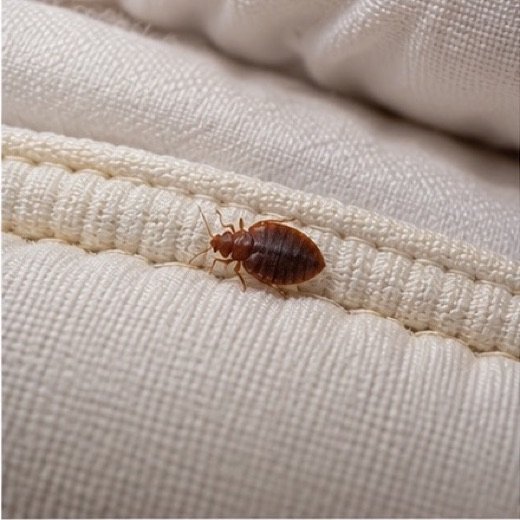
Look for physical evidence
Skin marks alone cannot reliably confirm bed bugs. Check mattress seams and tags, the bed frame and headboard, nearby furniture joints and the folds of upholstered items. The U.S. EPA lists live insects, shed skins, pale eggs and small dark or rusty marks among signs worth looking for.
Use a torch and inspect slowly. If you find a suspected insect or marking, take a close photograph and note the exact location. Avoid moving potentially infested items from room to room, because that can spread the problem and make inspection harder.
Be careful with second-hand items and travel luggage
Before bringing a used bed, sofa or other upholstered furniture indoors, inspect seams, joints and underside fabric. After travel, check luggage and clothing before storing them near sleeping areas. These are sensible precautions, not a guarantee that bed bugs will never enter a home.
Bed bugs can hide in small gaps and may be present even when a room looks tidy. Cleaning alone may not eliminate an established infestation, so avoid repeatedly applying unlabelled chemicals or discarding furniture before receiving an informed assessment.
What to ask a pest professional
Ask the technician to confirm the pest identification, explain which rooms and items need inspection, and provide a written preparation checklist. Clarify how belongings should be handled, whether follow-up visits are expected, and the exact re-entry and safety instructions for any product used.
Tell the team about children, pets, allergies, and any product already applied. Keep the plan practical: correct identification and coordinated preparation matter more than a quick spray based only on a bite or rash.
This guide offers general information only. It does not replace a property inspection, medical advice, or instructions on the product label. Always follow the qualified service provider’s safety guidance.