
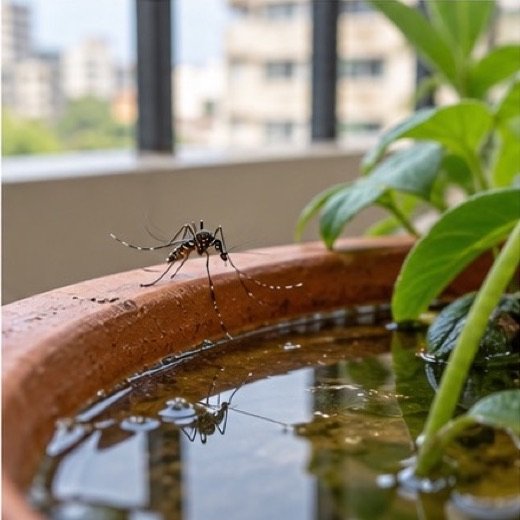
Start by removing standing water
The National Centre for Vector Borne Diseases Control advises source reduction, including removing potential breeding places and regularly cleaning or drying water containers. Around a Mumbai home, check plant trays, buckets, coolers, discarded containers, roof areas and drains after rain.
For tanks and other storage containers, use a secure, intact cover and address leaks or overflows. In a housing society, include common terraces, parking areas and construction materials in the weekly check; mosquito prevention often needs coordination beyond a single flat.
A five-minute weekly household check
Walk around the home and building areas you can safely access. Empty or dry small containers, refresh or scrub items that retain water, clear leaves from accessible drain grates, and report blocked drains, leaks or uncovered tanks to the responsible maintenance team. Do not climb onto unsafe roofs or enter restricted tank spaces.
If water cannot be emptied or a site needs a specific larval-control measure, contact the local health authority or a qualified professional for guidance. Do not improvise chemical dosages or add products to drinking-water storage based on internet advice.
When professional pest control may help
If mosquitoes remain a concern after source checks, ask for an inspection that considers both indoor and outdoor conditions. Request an explanation of the proposed method, product label, precautions, ventilation and re-entry instructions. Fogging or spraying does not replace removing breeding sources.
Keep a note of the locations where activity is highest and whether it changes after rain. This helps the team distinguish a local issue from activity coming from a shared or nearby area.
This guide offers general information only. It does not replace a property inspection, medical advice, or instructions on the product label. Always follow the qualified service provider’s safety guidance.