
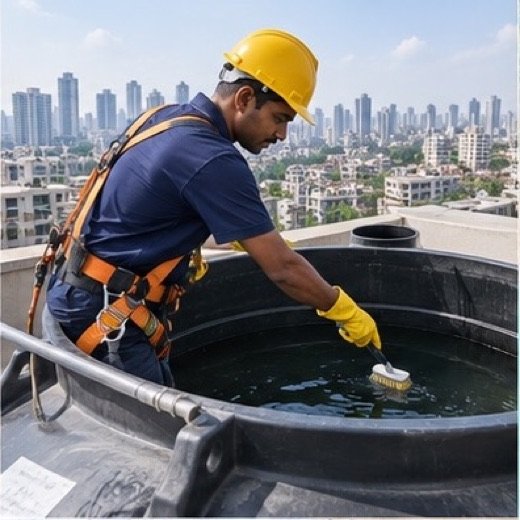
Plan around the building’s water use
Before arranging work, identify which tanks serve the building, who controls the pump and valves, and how residents will be informed about a temporary water interruption. Confirm the tank type, approximate capacity, access route and whether a separate drinking-water storage system is involved.
Ask the service provider to define the scope in writing: draining, removal of settled material, surface cleaning, rinsing, disinfection if included, and how the tank will be returned to service. The exact process should suit the tank, its condition and the product instructions.
Check access and safety before the visit
Make sure authorised access is available and that the work area can be isolated from residents. Tank entry is a confined-space hazard and should only be handled by trained personnel using appropriate procedures; residents should not enter tanks themselves. Keep electrical controls and pump operation with the responsible building team.
Agree who will verify the tank cover, overflow, inlet and outlet after cleaning. If the lid is damaged or does not close properly, record it for repair. A clean tank can be re-contaminated if it remains uncovered or water enters through a leak.
After cleaning
Ask for completion details, any observed damage or sediment concerns, and the provider’s recommendation for future inspection based on the tank and building usage. Keep a service log with the date, tank identifier, scope and follow-up work needed.
Cleaning a storage tank does not, by itself, certify that the water is potable. Follow advice from the building’s water supplier or a qualified laboratory if water quality is in question. WHO guidance emphasises keeping household water storage covered and sanitary to reduce contamination risk.
This guide offers general information only. It does not replace a property inspection, medical advice, or instructions on the product label. Always follow the qualified service provider’s safety guidance.