
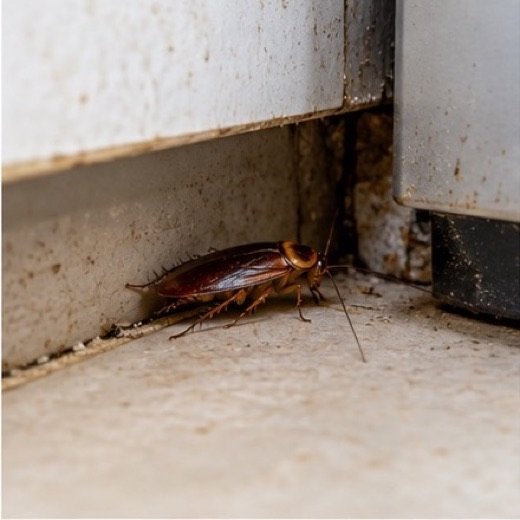
Start with the pattern, not just one sighting
A cockroach seen at night can be a reason to inspect, but it does not by itself tell you the size or location of an infestation. Look for repeated sightings, droppings, egg cases, or activity around hinges, appliance gaps, drains and dark corners. Note when and where you see activity; this helps a technician focus the inspection.
In Mumbai apartments, shared plumbing and service ducts can make the source less obvious. If neighbours report activity, tell the building manager as well as the pest-control team. Treating one flat without understanding nearby routes may not address the underlying issue.
Reduce food, water and hiding places
Store dry food in closed containers, wipe crumbs and grease, empty waste regularly, and fix dripping taps where possible. Clear clutter from under sinks and behind appliances so these areas can be inspected. Seal gaps around pipes or skirting only after checking that the opening is not needed for drainage or ventilation.
These steps support an inspection and treatment plan; they are not a substitute for identifying the pest and its harbourage. Avoid mixing household chemicals or spraying products into electrical appliances, food-preparation surfaces or drains unless the product label explicitly permits that use.
Questions to ask before treatment
Ask which areas will be treated, what preparation is needed, whether the product label gives re-entry or ventilation instructions, and what to do around children, older adults, pets and food. Request the aftercare instructions in writing and ask when a follow-up inspection is appropriate.
A responsible quote should be based on the site and scope, not a promise that every infestation will disappear after one visit. Share your observations and ask the technician to explain the proposed approach before work begins.
This guide offers general information only. It does not replace a property inspection, medical advice, or instructions on the product label. Always follow the qualified service provider’s safety guidance.