
Begin with the purpose of the barrier
Bird netting is generally considered when the aim is to deter birds from balconies, ledges or other openings. Invisible grills use slim cables to create a barrier while keeping sightlines relatively open. They are different products and should not be treated as interchangeable safety certifications.
Write down which opening you want covered, who uses the space, whether pets or children are present, and what you want to prevent. A site visit can check dimensions, fixing surfaces, access and exposure to weather before a layout is proposed.
Compare materials and installation details
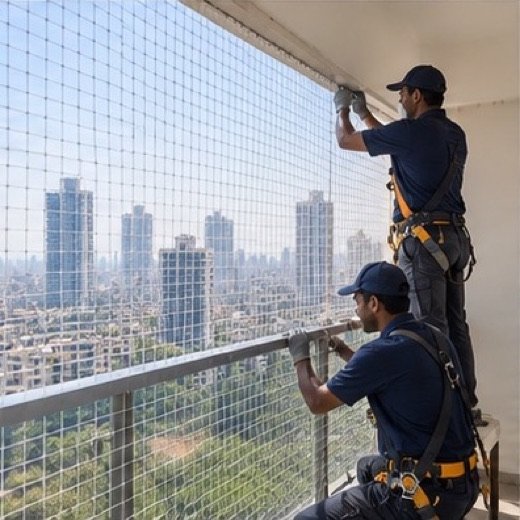
Ask about mesh or cable material, opening size or cable spacing, anchor specifications, edge finishing, expected maintenance and what is included in the installation. Request a sketch or clear description of the proposed coverage and confirm how the installer will access the outside face of the balcony.
In Mumbai apartment buildings, society rules, façade restrictions and permission for external work may apply. Check with the managing office before booking installation, especially when drilling, scaffolding or access from common areas is involved.
Do not rely on appearance alone
A neat finish is not proof that a barrier is suitable for every fall-prevention or load scenario. Ask the provider to explain product limitations, intended use, maintenance checks and any safety standards or test documentation that apply to the product being offered.
Confirm the final measurement, scope, warranty conditions and handover inspection in writing. If you need child-safety or fall-protection advice, consult a qualified building-safety professional and follow your building’s requirements.
This guide offers general information only. It does not replace a property inspection, medical advice, or instructions on the product label. Always follow the qualified service provider’s safety guidance.