
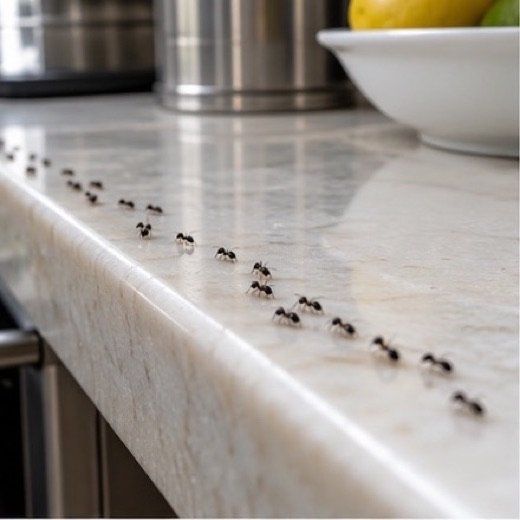
Follow the trail to understand the problem
Ants usually become noticeable where they can reach food or water. Observe the trail without disturbing it and note where it enters, what it is reaching, and whether activity appears in more than one room. Different ant species can behave differently, so a photograph or clear description can help with identification.
In multi-storey buildings, entry points may include window frames, service lines, door gaps or shared structural routes. Avoid assuming that the visible line is the nest; an inspection is needed to determine where activity originates and what treatment is suitable.
Make the kitchen less inviting
Wipe food spills promptly, keep sugar and other dry ingredients in closed containers, rinse recyclable food packaging, and empty bins regularly. Dry the sink area overnight where practical and repair leaks. Clean behind small appliances and check pet-food bowls if applicable.
If you find a gap, record its location and ask whether it should be sealed. Some openings serve a building or appliance function. Do not apply loose powder or liquid pesticide near food, utensils, children or pets unless the label specifically allows that placement.
When to request professional help
Consider an inspection when trails return despite routine cleaning, appear in several rooms, or seem to come from a wall void or shared service area. Tell the team what you have already tried, including any product used, and keep its packaging or a photo of the label if available.
Before work begins, ask for the proposed treatment locations, preparation, safety precautions, and follow-up guidance. A clear scope helps you compare service recommendations without relying on a one-size-fits-all promise.
This guide offers general information only. It does not replace a property inspection, medical advice, or instructions on the product label. Always follow the qualified service provider’s safety guidance.